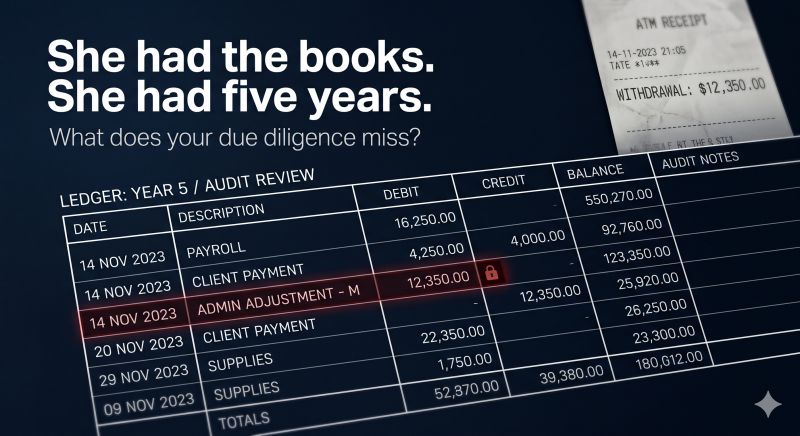
On May 28, 2026, Deborah Beaudoin, 56, of Canton, Michigan, pleaded guilty in the Eastern District of Michigan to wire fraud for a five-year scheme that drained more than $598,000 from the small business where she worked as financial controller.
Beaudoin ordered unauthorized company debit cards linked to the business's bank account, withdrew cash at local ATMs, and deposited a portion into her personal accounts. To keep the withdrawals invisible, she made repeated false entries on the company ledgers so the card activity appeared legitimate. She faces up to 20 years in prison; sentencing will be set after a presentence report. Homeland Security Investigations Detroit worked the case.
Under the ACFE Fraud Tree, this is asset misappropriation through fraudulent disbursements, concealed by false accounting entries: the person with custody of the cards also controlled the ledger that would have exposed them.
A financial controller just pleaded guilty to stealing nearly $600,000 from a small business over five years. Nobody caught it while it was happening.
She had the debit cards. She had the books. She had five years of unchallenged access to the company's bank account. And she had a ledger she could edit whenever she wanted.
This is the control environment you inherit when you close a deal. The risk isn't that founders lie on a CIM. The risk is that they have no idea what's been happening inside their own financials. A trusted employee with access to payment systems and accounting records is one of the most dangerous and least-examined exposures in a mid-market acquisition. The books may balance. The fraud may still be there.
A Business Health Check ingests flat files and banking data and scores them against ACFE fraud typologies: unauthorized disbursements, ghost vendors, duplicate payments, suspicious debit and ACH activity, ledger manipulations. It doesn't replace financial due diligence. It surfaces what financial due diligence is designed to miss.
If you have portfolio companies or acquisition targets where a single employee controls financial operations with limited oversight, this is worth a conversation.

I've spent 15+ years investigating financial crime in law enforcement, fintech, and the credit bureaus. I write these briefs so the patterns are harder to miss. If this one hits close to home, I'm easy to reach.