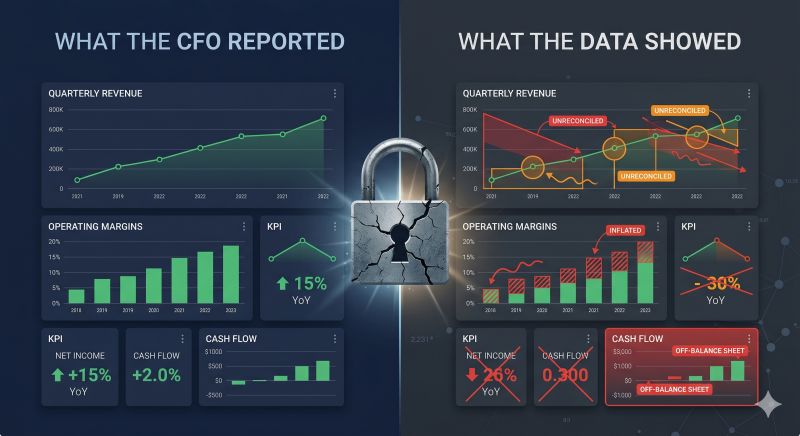
Pamela Aguilar, 65, CFO of a Danbury, Connecticut software company, pleaded guilty on June 4, 2026 to wire fraud stemming from a seven-year embezzlement scheme.
Between 2018 and 2025, Aguilar stole more than $739,466 through unauthorized ACH and wire transfers to her personal accounts, fraudulent checks, cash withdrawals, and personal expenses charged through PayPal and company credit cards. To conceal it, she submitted falsified weekly cash reports and monthly financial statements to the CEO. She faces up to 20 years in federal prison.
This is asset misappropriation concealed through financial statement manipulation, the oversight function itself was the fraud vector.
The CFO was in full control of the financials.
That is the problem I see in this week's DOJ press release out of Connecticut. Pamela Aguilar, Chief Financial Officer of a Danbury software company, pleaded guilty to wire fraud on June 4. She had embezzled over $739,000 from her employer over seven years, using ACH transfers, wire transfers, checks, PayPal charges, and credit card payments, all routed to accounts she controlled.
The CEO received the monthly financial statements. Aguilar wrote them.
For PE and VC investors, this is a classic control failure hiding in plain sight. The person responsible for financial oversight was also the person committing the fraud. When there is no independent review layer, no segregation of duties, no automated transaction monitoring, a CFO or senior financial officer can drain a business for years without triggering a flag.
This is a due diligence problem before it becomes a legal problem. In acquisition contexts, inflated margins, clean-looking books, and strong cash narratives can all be manufactured by a single trusted insider. Post-close, the same insider dynamic persists in portfolio companies that lack third-party oversight.
A Business Health Check changes that calculus. By ingesting flat files and banking data and scoring transactions against ACFE fraud typologies, unauthorized transfers, vendor irregularities, payroll anomalies, duplicate payments, it surfaces the patterns a compromised CFO can hide from a CEO but cannot hide from the data.

I've spent 15+ years investigating financial crime in law enforcement, fintech, and the credit bureaus. I write these briefs so the patterns are harder to miss. If this one hits close to home, I'm easy to reach.